Wednesday, January 8, 2014

More memoir inspiration

When my stack of books-to-be-read shrank to dangerously low levels, I took to the attic stacks to see what I'd overlooked. I found Modern American Memoirs, a collection of 35 excerpts from writers ranging from Malcolm X, Zora Neale Hurston and James Baldwin, to Harry Crews, Wallace Stegner and Margaret Mead.

While reading it, I've alternated between being inspired and getting depressed.

As regular readers (reader?) know, I've been working on a memoir about a road trip I took in 1988 (see November 13, 2013, "Drafting"). I started writing it in earnest in April 2012. Last year I had a handful of friends and family read it, while I took a nice long break from the process. I got back several useful comments about the manuscript, and in the early fall started in on another draft.

My buddy Jim, who curated the Movable Feasts short story collection that I contributed to, told me that I needed to "punch up" my prose. I took his comment to heart, and have been trying to do that, while simultaneously editing my copy down to tight sentences.

Those may seem to be opposite goals, but they're not. I'm trying to make the story come to life, to make it less "newsy," which is a common problem of mine in writing anything from songs to emails to short stories. I blame my journalism degree. Using more vivid language, however, doesn't mean wasting words and extending sentences. I want everything I write to be bright and useful.

I find it too easy sometimes to edit my manuscript without making the complementary changes in tone. I've looked over the chapters so many times that the whole process becomes rote. There is a big challenge in this process, but I'm equal to it.

Making the challenge even greater is reading some of the fantastic stories in Modern American Memoirs.

Take, for instance, this passage from Stegner's Wolf Willow, which mixes memoir, history and, evidently, fiction:

What we did on the homestead was written in wind. It began as it ended -- empty space, grass and sky. I remember it as it originally was, for my brother and I, aged eight and six, accompanied my father when he went out to make the first "improvements." Except for the four-foot iron post jutting from the prairie just where our wagon track met the trail to Hydro, Montana, and for the three shallow holes with the survey stake at their apex that marked the near corner of our land, there was nothing to distinguish or divide our land from all other, to show which 320 acres of that wind and grass were ours.

I'm trying my best to make my book purely nonfiction. I've done a good job putting the narrative arc together, and filling in details culled from audio tapes, journal notes, newspaper articles I wrote and conversations with my fellow road trippers. And I've got a primary theme: my struggle to break out of my comfort zone and just have a good time during our adventure.

But I worry that the story is too boring at times. My buddy Jim suggested that if I opted not to punch up the story as is, I should fictionalize the tale in order to make it go in all sorts of crazy directions.

I fictionalized some of the stories from the road in my collection, (C)rock Stories: Million-Dollar Tales of Music, Mayhem and Immaturity (BUY IT!!), so I'm not interested in taking that road (pun intended).

So I'm hoping to get some ideas from Modern American Memoirs about how to make my story pop without sacrificing the truth. Stay tuned....

(For more writing that's inspired me, see May 25, 2012, "Inspiration.")

Friday, January 3, 2014

Something about jarmusch or lurie or edson or all three

The title of this blog meant something when I wrote it down several weeks ago. Now, I have no idea what I wanted to say about filmmaker Jim Jarmusch ("Stranger Than Paradise," "Down By Law," "Mystery Train") or John Lurie and Richard Edson, who starred in "Stranger Than Paradise." But I'll come up with something, so stick around.

I saw "Stranger Than Paradise" during college, in 1984, on the big screen at the Colonial Theatre in Keene, NH. I loved the absurd dialogue, the aimless road trip, the cool clothes and my introduction to the wild music of Screamin' Jay Hawkins.

I developed a crush on the female lead, Eszter Balint. She was Euro-cool with her accent, cigarettes and defensive attitude. Here's the trailer:

Balint has since appeared in other films (Woody Allen's "Shadows and Fog," Steve Buscemi's "Tree's Lounge") and recorded music on her own and with many others, including Lurie.

Lurie was snide and funny, and dressed like nobody I knew. He had done a few small films before "Stranger." Since then he's appeared in several more, including "Paris, Texas" and "Wild at Heart," two movies I enjoyed, although I remember nothing about them. In 1991, he hosted "Fishing With John," a show that featured him angling along with underground heroes including Jarmusch, Tom Waits, Dennis Hopper.

I saw Lurie and his band, Lounge Lizards, years ago in Cambridge, Mass. They were terrific, and Lurie was just the same in person as he was on screen: droll, stylish, sarcastic.

Here's my favorite Lounge Lizards song:

Edson was sweet and a bit slow. "Stranger Than Paradise" was his first film. He's worked consistently ever since, appearing in films ranging from "Desperately Seeking Susan" with Madonna to "Good Morning Vietnam" with Robin Williams, and TV series including "Vegas" and "Perception."

Years after seeing "Stranger Than Paradise," I learned he once drummed for Sonic Youth, which in my mind made him forever cool.

As for Jarmusch, I've seen a bunch of his movies since "Stranger Than Paradise": "Down By Law," "Mystery Train," "Night on Earth," "Ghost Dog: The Way of the Samurai," "Coffee and Cigarettes" and "Broken Flowers."

Other than "Stranger Than Paradise," I haven't seen any of these other films more than once, so little from them sticks with me. So what's my point?

Just nostalgia, I guess. I rarely go to see movies any more, never mind films. I miss the days of small, independent, quirky works of art in which little ever happens. I don't know much about the mumblecore school of movie-making, but I'm guessing it's like Jarmusch's films -- small, stupid, goofy, uncomfortable, clever, cute, raw.

I can relate to this kind of art. As I've gotten older, I've become more comfortable with the notion that I'm not the deepest well in Artesia. I write fiction that doesn't include enough physical description. I don't develop full-blown characters. In my non-fiction, I have difficulty expressing what I was feeling at certain junctures, and my ability to flesh out other characters leaves something to be desired.

In my short story collection, (C)rock Stories: Million-Dollar Tales of Music, Mayhem and Immaturity, I focused on telling a story and not so much on character development. I'm OK with that, because I knew my limitations. I wanted the stories to feel like something one friend would tell another about "that time we saw Foghat in a small bar" or "when we played that lady's funeral in New Mexico" or "getting ripped off on our way to an Echo & the Bunnymen concert."

Slice of life, I guess you call it.

I'm always working on this, trying to push myself to show, rather than tell, to use a full paint palette instead of employing No. 2 pencils. But as "Seinfeld" showed the world, sometimes it's OK to build something from small, seemingly unimportant moments.

Friday, December 6, 2013

The Band That Time Forgot

Time was, I used to go out to see bands just about every weekend. You know, in the good old days before I had kids, and before standing around for three or four hours on my flat feet led to the kind of lower back pain that keeps Bengay in business.1

That there, right at the end of the previous paragraph? My first ever footnote on this, or any other, blog.

As I was saying: Beth and I went to the Middle East, TT the Bear's Club, the Lizard Lounge, Bunratty's, the Kinvara, Johnny D's and other clubs in Boston, Cambridge and Somerville. Many of the bands were touring acts, but plenty were local talent. Some of my favorite locals we saw included Slide, Charlie Chesterman & the Legendary Motorbikes (R.I.P., Charlie), Morphine (R.I.P., Mark Sandman), Susan Tedeschi, Bullet LaVolta and Sleepy LaBeef.

For a short time, I did some unpaid work for Summit Records (which grew into Boston metal label Wonder Drug), and got to see bands including 6L6 and Honkyball.

No matter how many bands a music nerd such as myself sees, there are always some that get away. I never saw Dead Kennedys, for instance. I had an opportunity in college, and I passed it up. I missed Gang of Four in their heyday, but made a point of catching them when they got back together in 2005.

On the local level, I wish I'd seen Chevy Heston. They were on Boston's Cherry Disc Records, which counted among its artists Letters to Cleo, Tracy Bonham and Heretix.

Chevy Heston (at one time known as Chevy Half-Ton, I believe) included several players over its short career, including Mikey Welsh (later of Weezer) and George Tsiaras of the aforementioned Honkyball. The primary dudes were Matt Martin and Zephan Courtney. After Chevy Heston broke up in the late '90s, Martin went on to form Kate Diamond, a band named in an obvious take-off on handbag designer Kate Spade.

Chevy Heston's songs are short, hypnotic and occasionally vulgar.

Here's an example, the title track of 1995's Destroy, whose songs speak of slutty high schoolers, perverted teachers and administrators, violent mishaps, drugs and conspiracies.

Here's "Pressurized at 16" from 1994's self-titled effort.

These are the only two individual videos for Chevy Heston songs I've been able to find on YouTube. Fear not, though, for I have found a 40-minute concert recorded in Oklahoma City in 1996. Enjoy!

1. The word "Bengay" makes me giggle. Can't help it.↩

Sunday, November 24, 2013

Moments of Bliss

The 51-second mark of Honkeyball's "Kemosabe."

The 4:38 mark of Metallica's "One."

When The Police hit the 2:31 mark on "Driven to Tears."

What do these points in musical time have in common? They're a few of my moments of bliss, little goosebump triggers. Every time I get to those points in those songs, I'm excited, no matter how many times I listen to them. These are by no means the only songs that bring on this response. Other artists, ranging from Susan Tedeschi to Queen, the Flaming Lips to James Brown, elicit similar Pavlovian responses.

That's why, as much as I love movies, television and books, nothing hits me like music does.

Here's "Kemosabe":

Here's "One":

And "Driven to Tears":

Friday, November 22, 2013

Your Holiness

Despite my sacrilegious ways (or is it "sacrilicious"?), I find beauty in houses of worship. Several months ago, I published the first post of what I promised would be a semi-regular feature here ("Holy!" from March 28, 2013).

Here's part two.

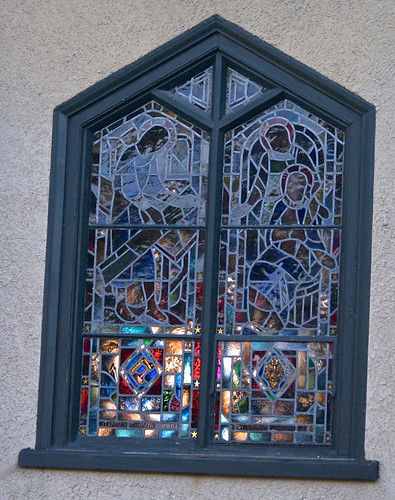
Let there be (some) light

This stained glass window is one of many at Church of the Good Shepherd in Dedham, Mass. The church dates to 1876.

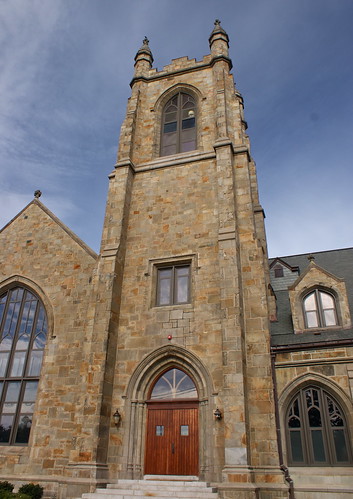
St. John's?

I love this doorway at St. John's United Methodist Church, Watertown, Mass. The building was constructed in 1895.

Church/Condo

The former First Baptist Church, Watertown, Mass., is now known as Mount Auburn Village. It houses eight condos.

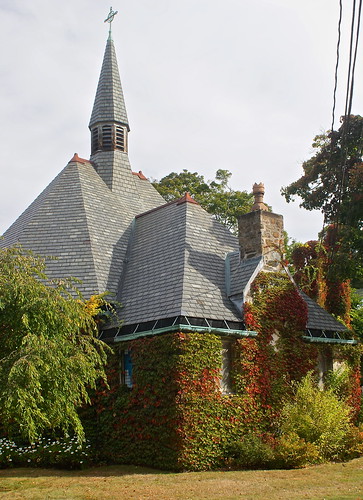
Small Grace

Grace Episcopal Church, Newton, Mass., built in 1873.

Thursday, November 21, 2013

Book Review: "After Visiting Friends: A Son's Story" by Michael Hainey

Boy did I enjoy this book.

I'm tempted to leave my review at that, but that wouldn't do much to burnish my reputation as a writer. Using the word "burnish" might help, though.

Michael Hainey, now the deputy editor of GQ magazine, was six when his father died under mysterious circumstances in 1970. Growing up in Chicago, Hainey rarely talked with his mother about his father, or how he died. He ached to learn the details of his father's life, but was discouraged by his mother and other family members from doing so.

He graduated high school, went to college, got a job and finally, in his 30's, decided he needed to discover the truth.

Over the ensuing 10 years he sought out family members, his father's former colleagues, friends, neighbors and anyone else who might have a clue about how his father died. Hainey was stonewalled on a regular basis. He traveled great distances to meet people face-to-face. He used the skills he'd learned as a journalist to keep plugging away.

I really admire Hainey's writing. He uses short, crisp sentences to get across deep, often emotionally charged points. He is selective with his flashbacks, and extremely creative in their use.

"Here they come. People I know. People who know me. Blood, they say. Relatives, all. In big, wide American cars, they drive into my faded-asphalt lot. There's my uncle, Paul, my aunt Nancy; my godmother, Lorraine and her husband, Clarence. There's Uncle Harry, there's Aunt Sue. They are waving to me. I am one boy on two wheels, going in circles, not stopping. And there they go, one after another, to do what you do when a life stops. Coming to close the circle."

For the last 19 months I've been working on a memoir of my own. Currently I'm on the fifth draft, and I've been inspired by After Visiting Friends: A Son's Story. I've been cutting as much fat as I can, and making fewer words do more work.

My story is nowhere near as fascinating as Hainey's, though.

I don't want to give away too much. Hainey's father was a newspaperman in Chicago. Like his colleagues, he lived by a certain code, which called for keeping things close to the vest. Maybe that's just called being a man, I don't know. When he died, the senior Hainey worked the late shift at the Chicago Sun-Times and spent many an early morning drinking alongside his buddies at bars all around the Windy City.

One night he drops dead, at age 35. Years later, his son comes across obituaries written in the Sun-Times and other Chicago papers. He notices that things just don't add up in these life summaries. His mission becomes figuring out just how his father died, who he was with, and why everyone clams up when the topic arises.

I'm gonna leave it at that. Go read this book.

Wednesday, November 13, 2013

Drafting

(I gotta see this movie....)

For more than 18 months, I've been working, off and on, on a memoir about a road trip I took with three buddies in 1988 -- half a lifetime ago. I thought I'd have it done and ready for publication, whether traditional, self-made or ebook, some time this year. But writing projects rarely go as smoothly and quickly as you think they will.

I wish I were done with it, but I've had fun during each step of the process. The first draft involved fleshing out a blog series I'd done in 2008 detailing the four-month journey. In that early stage, I considered offering a wise elder stance, urging recent high school and college grads to forgo business school or smart phone app development in favor of discovering the greater world around them. I wrote about how easy it is these days to stay in touch with friends and family, but that when you're on the road, you should try to cut as many ties as possible to maximize your adventure.

In those heady early days of drafting, I threw in all sorts of background information about trips I took as a kid and at the end of college, mentioned all sorts of cool places I wish my buddies and I had stopped at, extolled the virtues of motels, diners, drive-in theaters and roadside attractions.

As I read the journal I kept on the 1988 trip, and thought more deeply about the journey than I ever had, I realized that I didn't live up to the expectations I had for the trip. As I analyzed some of the trepidation, anxiety and fear I had on the road, I realized that my son, Owen, shares some of these issues.

So I tried to make that part of the book as well. I tried to balance a linear narrative of the trip and analysis of who I was then and who I've become and how that all has an impact on my family.

And I laid a lot of this out in a foreword.

In the second draft I began researching some of the places we'd visited, filling in background information on bars, tourist sites, hotels, motels, etc. I also sent questions to my fellow travelers, as well as members of my family, and other friends, looking for additional information to shore up my account.

The third draft found me tightening things up, continuing to do research and add information from friends and family. Then I needed a break. So I emailed the manuscript to several people, four of whom got back to me with comments and suggestions.

For the last few weeks I've been working on the fourth draft. During this process I shed the foreword, realizing that it served as an outline of sorts for the book, but wasn't necessary for readers. I also ditched the stuff comparing me to Owen, and shaved down extraneous background information and bits about places we never visited, although I wish we had.

I already know that there will be at least one more draft. One of the comments I received from a reader was to punch things up a bit, to make the words sing on the page a bit more. I've done some of that, but at times I get lazy and find myself reading through the text with editing in mind more than rewriting.

Another new facet of the latest draft is photos. I brought a broken camera with me on the road trip, although I didn't know it was a lemon until I tried to get a few rolls developed. Initially I thought my memoir wouldn't have any pictures, which bummed me out.

But as I edited, I realized that I had some pictures to add. Some are from a family vacation that I reference in the book. Others were provided by my buddy Andy, who was on the trip. Others are from college events, provided by friends. One is the worst picture ever taken of me, at a going-away party before I went on the trip. I'm wearing a brown turtleneck, a green sweater, have an unstylish mid-length hairdo and a beard. I'm 22, but I look like I'm pushing 40.

I've enjoyed every stage of writing this book, and look forward to the next one. At some point I plan to seek out an editor or agent, and then there will be more drafting. I don't know when the book will get published, or by whom. I don't know if there will be any interest outside my immediate circle of friends and family.

I'm not writing this book for the money, but I hope it sells quite a bit better than my first book, (C)rock Stories: Million-Dollar Tales of Music and Mayhem, which may have moved 100 units.

I think my memoir has more general appeal than my short story collection did. Whereas (C)rock Stories dealt with universal issues ranging from love, hate, death and growing up, I have a feeling that the music references and themes throughout the book might have alienated some readers.

This book is more self-analytical and deals with emotional struggles and interpersonal battles more openly.

Honestly, I don't want this writing process to end. I enjoyed writing (C)rock Stories, but there was a lot of work -- 10 years' worth, off and on. I'm finding it much easier to write this book, even though I put myself in an often unflattering light. Once I'm done with the memoir, I'll move on to another short story collection based on memories of growing up in my hometown. One of those stories is complete, and will appear in a new anthology being curated by my good friend Jim Corrigan.

Jim published Movable Feasts, which also included one of my stories.

OK, that's enough.